Modern obstetrics under real conditions
A complex moment for L&D leadership
Modern obstetrics is shaped by tensions that do not resolve themselves: rising intervention rates, growing pressure on staff, increasing patient expectations and the operational reality of high-acuity care. Physiology-led birth is widely supported as a goal but consistently delivering it under real L&D conditions remains difficult. Continuous monitoring, high epidural rates, fatigue and limited staffing all reduce mobility, even when teams know how much it matters.
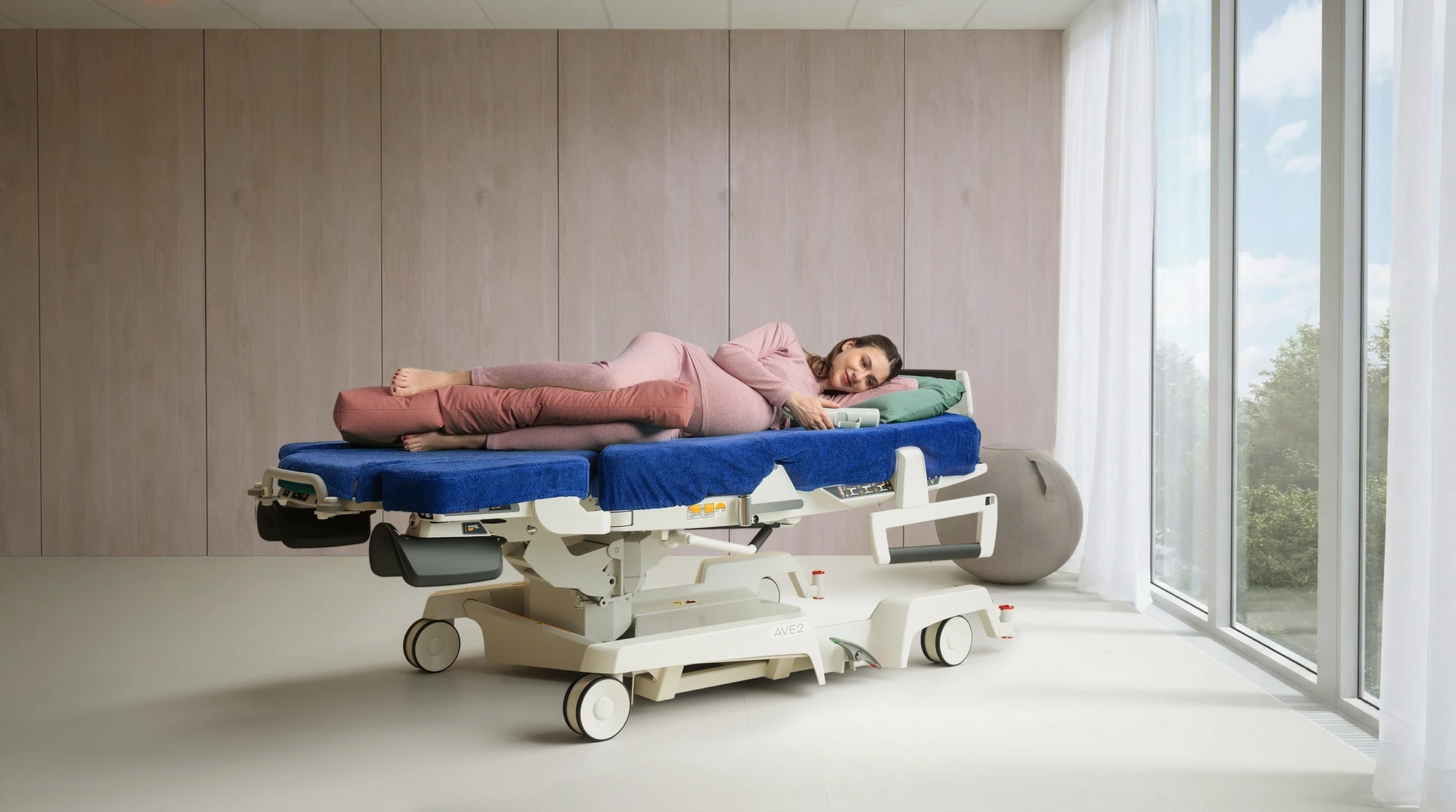
Vibwife was built inside that reality. By integrating gentle, rhythmic movement into the birthing bed, it makes mobility support repeatable across shifts and independent of perfect circumstances. It does not change clinical workflows or replace caregivers — it gives L&D units a structured way to operationalize movement support, supporting outcomes, staff capacity and patient experience at the same time.
Financing
Vibwife can be funded through hospital foundations and donor partnerships.
A structured response, integrated into your unit
A structured mobility solution for modern obstetrics
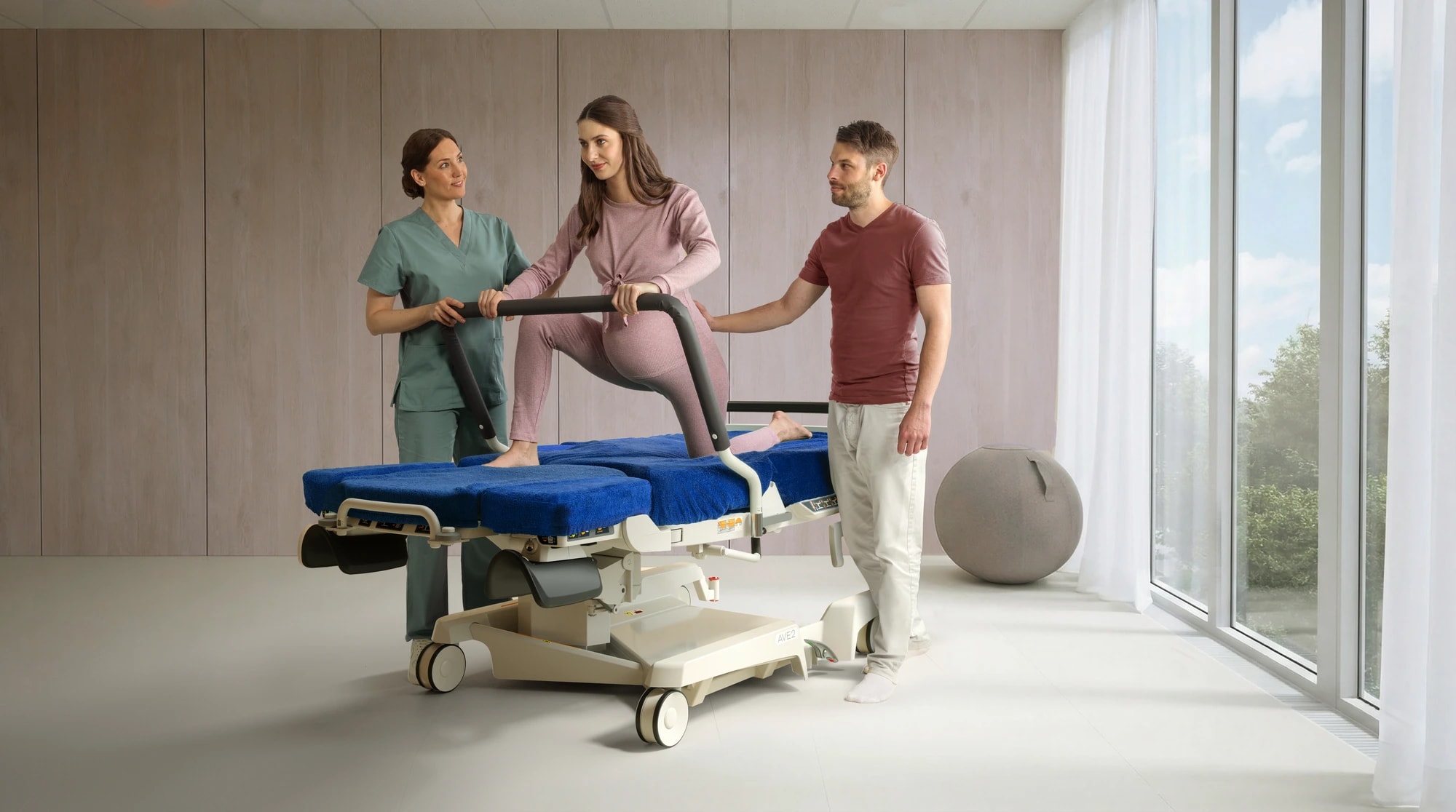
Vibwife integrates four midwifery-inspired movement patterns — swaying, jiggling, infinite harmony and rocking — directly into the birthing bed. It supports physiology-led care under real clinical conditions, including with continuous monitoring, epidural and bed-based care. The result is a consistent way to deliver movement support, regardless of staffing, shift or experience level in the room.

Integrated, not added on
Vibwife integrates into the LINET AVE2 birthing bed — one of the most versatile birthing beds in modern obstetrics. There is no separate device to manage, no parallel workflow, no additional setup time. Caregivers operate Vibwife alongside their existing clinical routines, and the system is compatible with CTG, epidural and standard monitoring protocols.

What changes for your unit
Five operational shifts associated with structured mobility support in L&D
Improved clinical outcomes
Studies associate mobile, upright birth with shorter active labor, fewer C-sections and reduced epidural use.
Reduced staff workload
Continuous, low-strain mobility support that decreases the need for hands-on repositioning across long shifts.
Evidence-aligned care at scale
Movement support that aligns with WHO, AWHONN and ACOG guidelines, deliverable on every shift.
Integration with existing infrastructure
Built into the LINET AVE2 birthing bed, with no parallel workflow or new equipment to manage.
Differentiation in a competitive market
A modern, evidence-based birth experience that supports patient satisfaction and unit reputation.
Built for long-term workforce sustainability
Around 40% of midwives experience work-related burnout, and over 70% report low-back discomfort linked to manual positioning during labor. Vibwife replicates traditional mobilization techniques ergonomically and continuously — protecting clinical workforce capacity across long shifts and across years of practice.

What hospital teams say
Insights from L&D leadership and clinical teams using Vibwife
„In my 23 years as an L&D nurse, I've seen how quickly women can lose freedom of movement in hospital birth. What excites me about Vibwife is that it helps bring movement — and a sense of empowerment — back into labor, even when patients can't move easily themselves.“
Callie, Labor & Delivery Nurse, Mercy Hospital Springfield
Published research
Midwifery, December 2021
Safety and acceptance of "Vibwife"
Monod et al. · 2021
A new moving mattress to support mobilization during labor: Result of a clinical study.
Journal of Nursing Management, January 2015
Job satisfaction and leaving intentions of midwives
Jarosova et al. · 2015
Multinational survey of 1,190 hospital midwives across seven countries: low job satisfaction is strongly linked to turnover intentions, especially around work-life balance, professional opportunities, and external rewards.
BMC Pregnancy and Childbirth, October 2015
Birth position and obstetric anal sphincter injury
Elvander et al. · 2015
Population-based study of 113,000 spontaneous births: standing and lateral positions associated with lower risk of severe perineal tears; lithotomy associated with higher risk across all parity groups.
How adoption works in practice
From initial fit to fully integrated, in three structured phases

Assess fit
The first step is a structured conversation with our partner LINET to understand your unit's current setup, infrastructure and goals. We assess clinical fit, staffing patterns and existing AVE2 compatibility, and identify the right pilot scope — from a single room to a full L&D unit.

Install and train
Installation integrates Vibwife into the AVE2 birthing bed with minimal disruption to existing workflows. Training is structured and accredited: caregivers complete online pre-training before installation, followed by hands-on training on-site. The LINET Academy supports ongoing access to training materials, including Spinning Babies® content.

Integrate and scale
After go-live, Vibwife is part of standard practice. Caregivers manage it alongside existing clinical routines, with ongoing support from LINET and the Vibwife team. Most units begin with a pilot and scale across additional rooms based on early outcomes — clinical, operational and patient-reported.
Bring Vibwife to your unit
Two ways to take this further.
Share with your team
The full Vibwife overview — share with your head midwife, L&D manager, or hospital leadership team.
Preview · what your colleagues will see
“Vibwife — birth mobility integrated into the LINET AVE2. Worth evaluating for our L&D unit:”

For Hospital Leadership — Vibwife
Modern obstetrics under real conditions.
🔗 vibwife.com
Email me the link
Send the page to your inbox to read or forward later.
Book a demo at your hospital
Hands-on demo in your unit with our team.
- 1Tell us about your unit (2-minute form below)
- 2We coordinate a free prep call with your head midwife or L&D manager
- 3Vibwife arrives on-site for a structured hands-on demo